
Many Minds. One Hive. Every Cell Connected
A non‑profit community and environmental project reconnecting people with nature — and with each other.

It is also about how that work is done.
A project can have good ideas and still fail if it loses care, honesty, patience, safety or purpose. The values behind Bee Sixty-Eight are there to stop that happening.
They are practical values, not decorative ones.
They shape how the site is used, how decisions are made, how people are welcomed, how evidence is handled, how risk is managed, and how the land is cared for over time.
These values are the working behaviour of The Hive Effect.

Stewardship before ownership
Bee Sixty-Eight begins with stewardship: caring for land in a way that respects its history, its present condition and its future value.
It treats land as something held in responsibility, not something to control, consume or decorate.
The principle is simple:
-
Land should be understood before it is changed.
-
Use should come with care.
-
Access should come with safety.
-
Improvement should come with patience.
-
Public value should be protected, not assumed.
Bee Sixty-Eight is built on the belief that neglected land can become useful again when people stop waiting for someone else to care first.

Evidence before noise
The Hive Effect is driven by evidence, not noise.
That does not mean being cold or distant. It means frustration has to be anchored in facts, records, lived experience, memory and visible reality.
The principle is simple:
-
If something is claimed, it should be checked.
If something is broken, it should be shown.
If something is possible, it should be explained.
If something is proposed, it should make sense.
Bee Sixty-Eight asks better questions, keeps better memory, and builds from what can be seen, understood and proved.

Safety makes access possible
Bee Sixty-Eight is built around access, but access has to be safe.
The apiary, growing areas, learning spaces, tools, paths and public viewing points all need to be planned with care.
The principle is simple:
-
Safety is not there to shut people out.
It is there to make participation possible. -
Children, visitors, volunteers, bees and wildlife all need to be considered before the site is opened up.
Good safety does not kill a project. It allows the project to last.

Open enough to learn
Bee Sixty-Eight should be open enough to learn from what works, what fails, what changes and what the land reveals over time.
Not every idea will be perfect at the beginning. Some things will need testing, adjusting or replacing.
The principle is simple:
-
A garden changes.
A hive changes.
A community changes.
A route changes.
The weather changes.
The land changes.
Living projects improve by listening, adapting and growing without losing their purpose.

Practical before polished
Bee Sixty-Eight does not need to look perfect before it becomes useful.
A raised bed, water butt, hive stand, compost bay, hand-built sign, reclaimed timber bench or safe viewing point can all carry real value.
The principle is simple:
-
Not reckless action.
-
Not rushed action.
-
Not action for appearance.
Practical action.
The aim is to build things that work, learn from them, improve them, and show what is possible at a human scale.

Community without performance
Bee Sixty-Eight is a community project, but community should mean more than a word on a page.
Real community is built through trust, usefulness, consistency and shared care.
The principle is simple:
Community does not have to be loud to be real.
Sometimes it starts quietly: with a path cleared, a bed planted, a hive explained, a conversation started, or someone feeling that a place is worth caring about again.
Bee Sixty-Eight has to be useful enough for people to return.

Long-term care
The Hive Effect is not interested in temporary gestures.
Bee Sixty-Eight has to be built with long-term care in mind: care for the bees, the land, the people, the planting, the wildlife, the water, the tools, the boundaries and the wider purpose.
The principle is simple:
Build slowly enough to maintain what is created.
A project can fail when it grows faster than its ability to care for itself.
Long-term care is not the exciting part people notice first, but it is the part that decides whether the project survives.
Thinking in systems
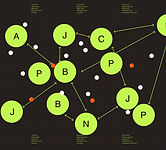
Bee Sixty-Eight is built from systems thinking.
That means looking at the connections between things instead of treating them as separate problems.
The principle is simple:
-
Bees are connected to flowers.
-
Flowers are connected to soil.
-
Soil is connected to water.
-
Water is connected to climate.
-
Food growing is connected to health.
-
Outdoor learning is connected to confidence.
-
Community stewardship is connected to public value.
Bee Sixty-Eight is not a collection of isolated features. It is a small living system where each part should support the others.
The final value is the one that connects all the others.

Bee Sixty-Eight is not a collection of separate ideas. It is a small living system where each part supports the others.
Values that have to work
The values behind Bee Sixty-Eight are not there to make the project sound good.
They are there to make the project work.
-
Stewardship keeps the land cared for.
-
Evidence keeps the work honest.
-
Safety makes access possible.
-
Curiosity allows the project to learn.
-
Practical action turns ideas into visible change.
-
Community gives people a reason to take part.
-
Long-term care protects what is built.
-
Systems thinking keeps everything connected.
These values are not separate from Bee Sixty-Eight.
They are how Bee Sixty-Eight becomes trustworthy, useful and lasting.

Explore the Bee Sixty-Eight vision
What the project can test and build: public viewing apiary, food growing, rainwater capture, habitat creation, reclaimed materials, low-impact systems and practical climate action.


